Dignity of Earth & Sky: South Dakota’s Monument to Native Heritage
3 MIN READ
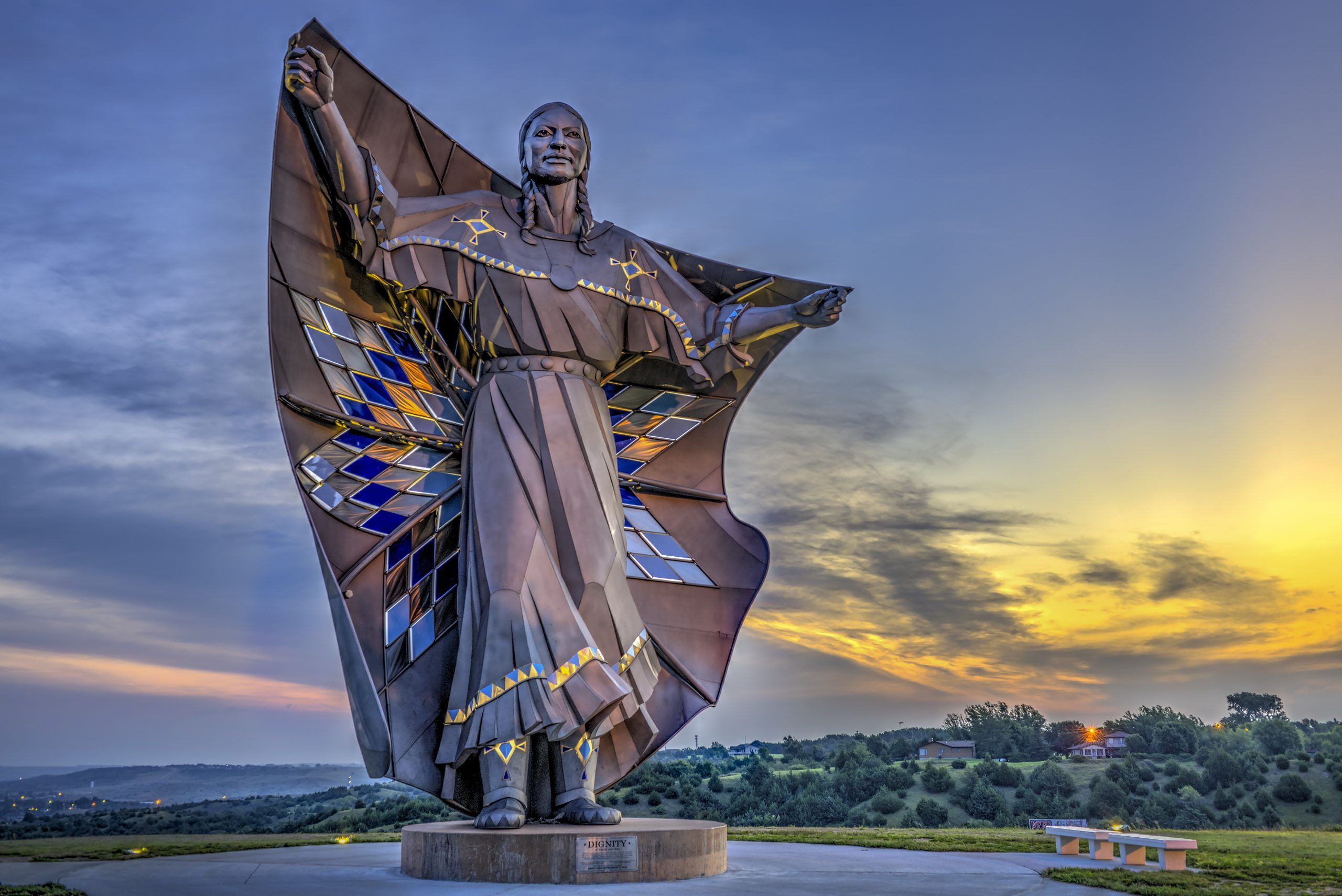
Photo credits Creative Commons license the original photographer.
3 MIN READ
She stood 50 feet tall on the bluff, her quilt wings unfurling against the sky. But her story begins long before steel and welding — in the ancestral plains, in the traditions of star quilts, and in a quiet but powerful resonance: that Indigenous culture endures, often unseen, but never silent.
In 2014, Rapid City philanthropists Norm and Eunabel McKie announced a generous gift: a large-scale sculpture to honor South Dakota’s Indigenous heritage, timed to commemorate the state’s 125th anniversary. They chose artist Dale Claude Lamphere (South Dakota’s Artist Laureate) to bring the vision to life, giving only two instructions: that it be Native in spirit, and that it depict a woman.
Lamphere began with sketches, then produced a one-eighth scale maquette before full fabrication in a remote workshop east of Rapid City. Hundreds of stainless steel panels, structural supports, and moving quilt elements were assembled, painted, and reinforced to resist wind and weather. The completed sculpture tips the scale at about 12 tons.
On September 17, 2016, Dignity was unveiled on a bluff above the Missouri River near Chamberlain, visible from the interstate below.
At first glance, Dignity’s presence is commanding — the female figure seems almost in flight. But the sculpture’s deeper power lies in its composite of symbolism and motion.
Thus, Dignity is not static memorial — she is kinetic, living across time, catching wind and light as if breathing.
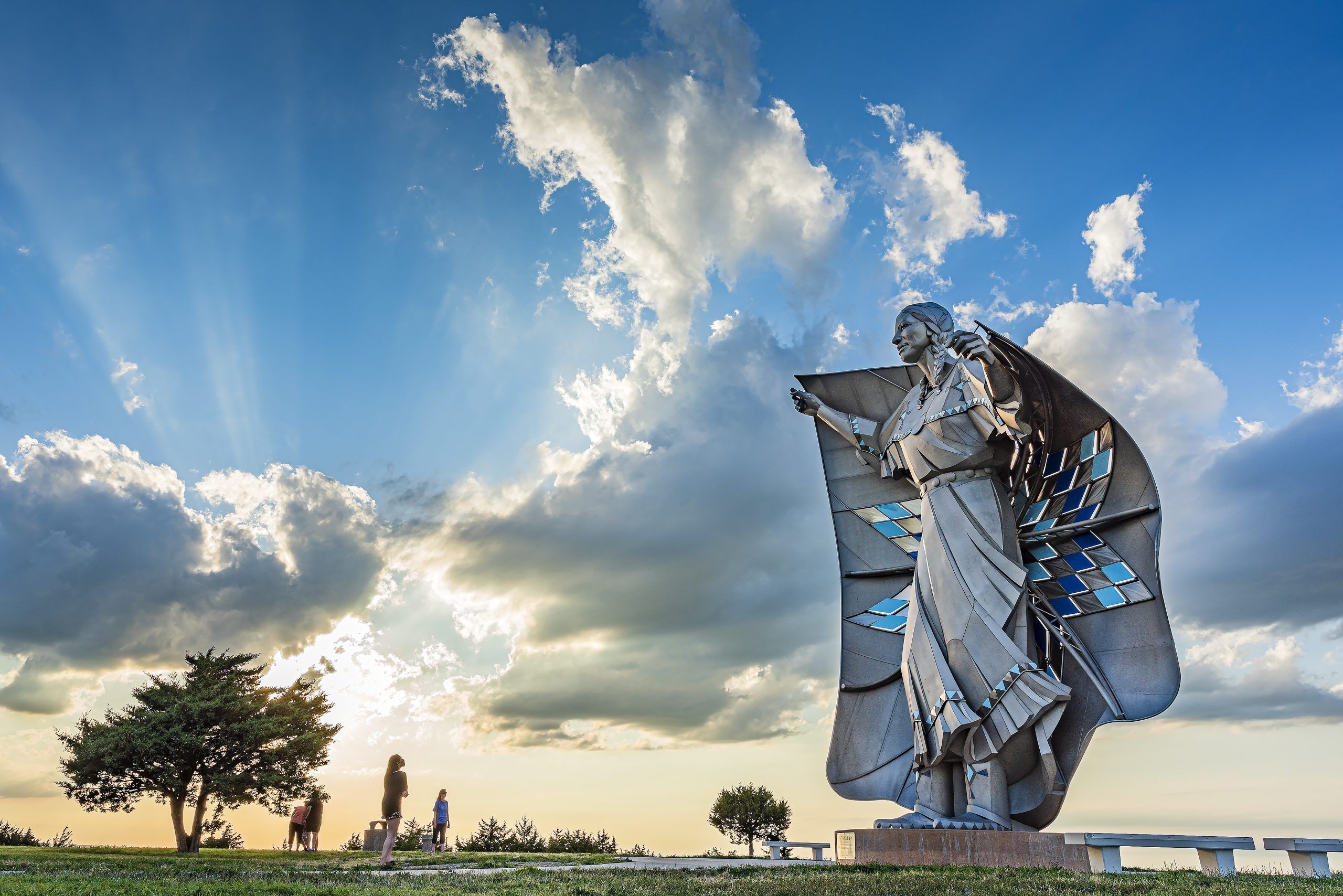
Photo credits Creative Commons license the original photographer.
Because the artist is non-Native, the project invited conversation about cultural authority and voice. Some Native artists questioned whether such a monumental piece should have been entrusted to Indigenous creators. Others praised Lamphere’s consultation approach and sensitivity to tradition.
In interviews, Lamphere acknowledged the delicate balance — he strove to “enter into the spirit” of the culture rather than impose his vision. Some voice that the project satisfies the state’s desire to memorialize Native presence while sidestepping local Indigenous artists who might lack large-scale funding.
Yet many Lakota and Dakota individuals and elders have welcomed Dignity as a visible acknowledgment of their continuing presence. Over time, the sculpture has become a meaningful public symbol rather than a flash in the pan.
One of the striking things about Dignity is how she transforms a rest stop into a contemplative site. For travelers on I-90, the bluff location ensures visibility from the road, inviting spontaneous stops.
The bluff overlooks the Missouri River, a longtime travel corridor and site of Indigenous movement and trade. Her gaze seems to bridge earth, sky, and water — perhaps a visual metaphor for interconnection. The name “Dignity of Earth & Sky” reflects that aspiration: to root the sculpture simultaneously in land and sky, body and cosmos.
The impact is not just symbolic: the sculpture has increased foot traffic to the welcome center, boosted regional tourism, and encouraged travelers to linger and reflect rather than simply pass through.
Now nearing a decade since its unveiling, Dignity stands as more than a monumental sculpture — she is a conversation piece in public memory. She is cited in license plates and promotional materials as an emblem of reconciliation and respect.
Her greatest legacy may be intangible: the way she invites passersby to pause, to consider the layered peoples and histories of the Plains, and to see Indigenous identity not as buried past but as present and — yes — dignified.
In the wider American narrative of monuments, Dignity offers a different path: not conquest or dominance, but presence, motion, and respect. In that, she may become more enduring than many stone idols — because she is alive in wind and light.

Explore America's quirkiest corners and untold stories, delivered to your inbox every day.
Odd America is your gateway to the weird, wild, and wonderful corners of the U.S. From quirky landmarks to strange history, each article uncovers a hidden gem or eccentric tale.
Not interested?
Click here to return to the sitePlease check email for a message from Odd America to confirm your email.
Don't forget to check your junk folder - just in case!