Ha Ha Tonka: The Ruined Castle Above Laughing Waters
5 MIN READ
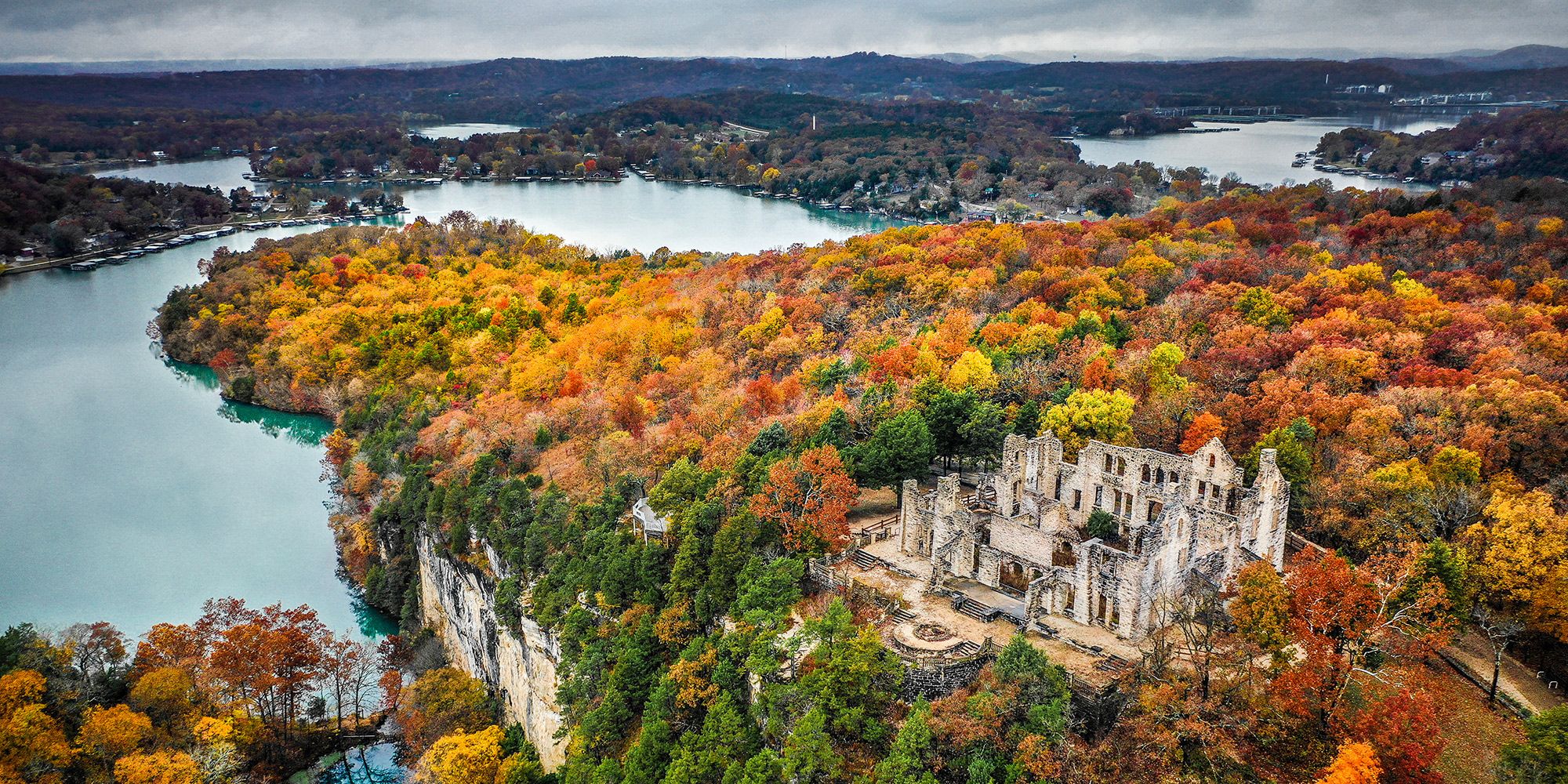
Photo credits Creative Commons license the original photographer.
5 MIN READ
Tucked into the oak-glades and rugged bluffs of the Missouri Ozarks, the ruins of the so-called Ha Ha Tonka Castle make an arresting first impression. You approach via a winding hillside trail, the stone rubble of a once grand estate rising above in ominous silhouette—walls but no roof, arches framing sky instead of glass. The name of the place whispers one thing—joyful “laughing waters”—yet the scene hints at something far more melancholic.
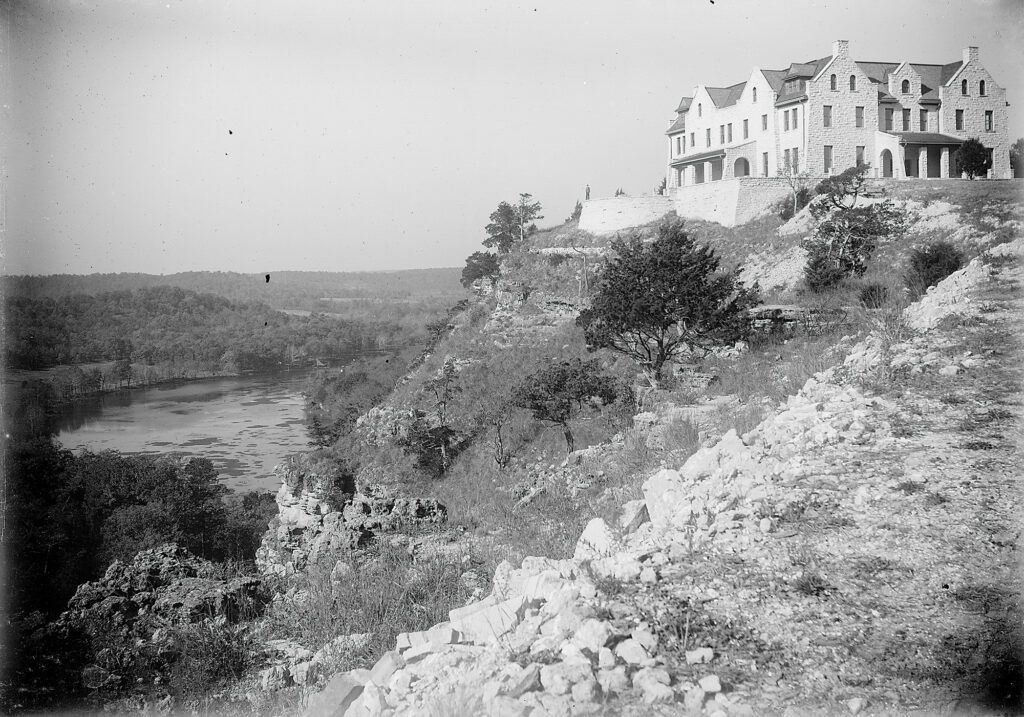
Around 1904, Robert McClure Snyder Sr. bought thousands of acres in Camden County, Missouri, including a populous spring and lake that locals called Ha Ha Tonka. He envisioned a grand European-style castle—a place where he and his family could escape the ferocious pace of business in Kansas City and step into a romantic world of stone, water, and wilderness. The pour of water from the spring, the sweeping view of the future lake, and the deep forest all suggested the right setting. So quarry crews cut local stone, imported expert masons, and began building.
However the dream turned dark early. In 1906, Snyder Sr. died in a car accident in Kansas City—the very future he had bought the land to enjoy was snatched away. His sons kept going: by about 1922 the castle was officially complete, along with a towering water-tower, carriage house, stables, guest wings—yet even then the costs were immense and the isolation severe.
For a brief moment the estate served as a testament to human ambition. Guests arrived by winding roads, stayed in lavish rooms, dined above the forest canopy, and possibly attempted to live out fantasies borrowed from European aristocrats. But the demands of upkeep on a remote bluff, the shifting economy of the 1930s, and the rising waters of the man-made Lake of the Ozarks (which submerged nearby land and altered the region) disrupted the castle’s viability.
Then came a final blow: October 21 1942. Sparks from a chimney ignited the cedar-shingled roof; with a gusting wind the fire spread through the estate and two structures collapsed. The castle was gutted, leaving only its skeletal stone shell standing sentinel. With no roof, no interior, and no master plan for revival, the dream quietly died.
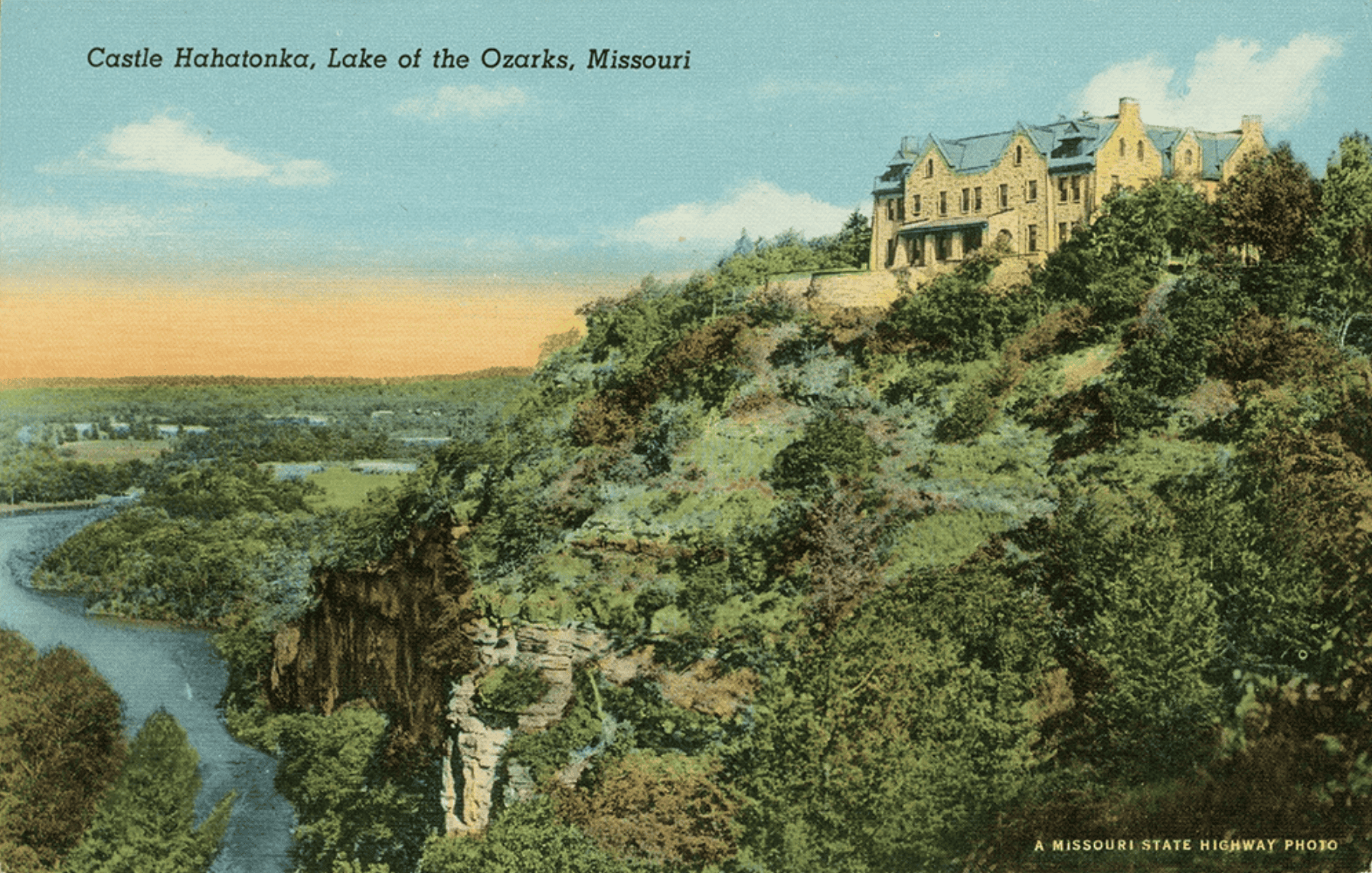
Photo credits Creative Commons license the original photographer.
By the 1970s the land was at risk of being subdivided, vandals burned the water tower in 1976, and eventually the state of Missouri acquired the property, establishing Ha Ha Tonka State Park in 1978. Today the site is visited for its strange collision of grandeur and decay. The castle ruins overlook 3,700+ acres of caves, sinkholes, natural bridges and one of Missouri’s largest springs—a geological wonderland wrapped in history.
It’s not just the castle; it’s the context. A stone fortress in the heart of the Ozarks. A name meaning “laughing waters” over a ruin haunted by memory. A wealthy dream built on wilderness, then undone by misfortune and fire. The scene invites speculation: who walked these halls? What parties were held? What quiet tragedies unfolded? The natural environment seems to stare down the human one. Visitors talk of feeling watched, of the wind sounding like footsteps in empty rooms.
Ha Ha Tonka is emblematic of early 20th-century American eccentricity: grand estates in improbable places, the collision of wealth and wilderness, the fragility of such dreams. It is also a narrative of nature reclaiming ambition: the castle is ruin not by design but by fire and time, and now geologic formations, spring waters, forest and ruin share the same story. It stands as a compelling voice: what happens when dreams are built on rock and water and wilderness—and when time walks in?
If you stand among the rough arches of the castle, look out across the lake, the spring, the stone walls—there are echoes of laughter, water, ambition, ruin. A perfect place to ask: What’s left of the dream?

Explore America's quirkiest corners and untold stories, delivered to your inbox every day.
Odd America is your gateway to the weird, wild, and wonderful corners of the U.S. From quirky landmarks to strange history, each article uncovers a hidden gem or eccentric tale.
Not interested?
Click here to return to the sitePlease check email for a message from Odd America to confirm your email.
Don't forget to check your junk folder - just in case!